Manufacturing Guide
Why Bulk Colour Differs From Your Sample
A bulk order that arrives a shade off the approved sample is a process failure, not bad luck. Here is where colour drifts, and what to check before bulk.
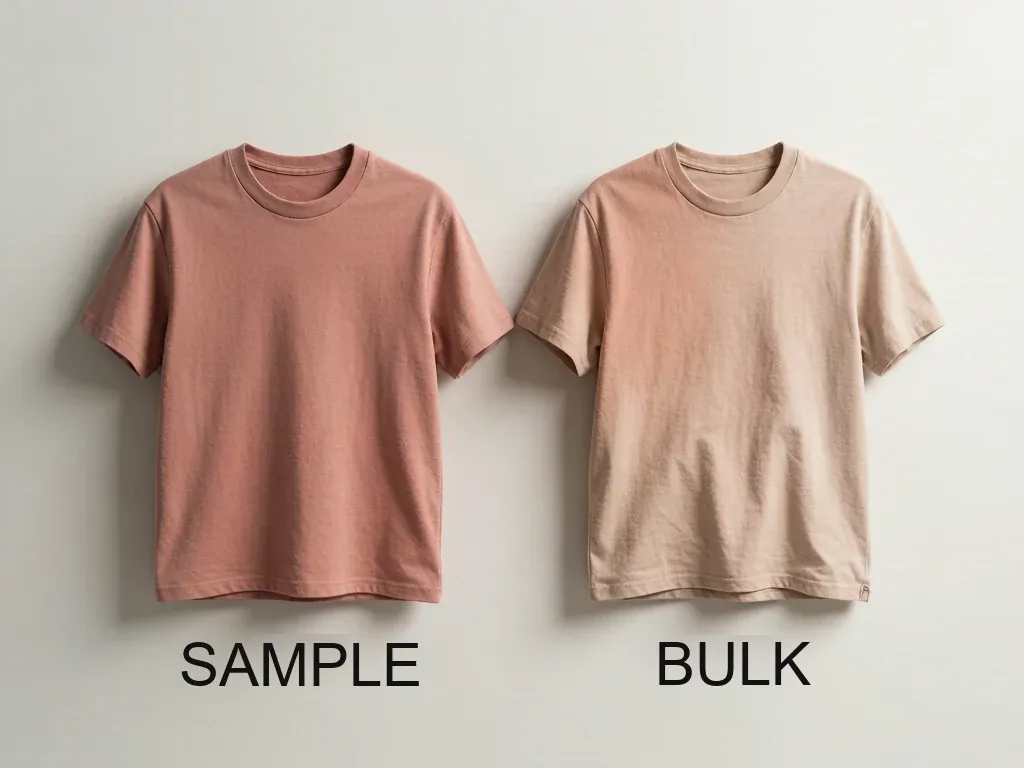
A streetwear brand came to us after a first order went wrong at another factory. The bulk shipment of 3,000 custom hoodies arrived a shade darker than the sample that had been approved. The difference was hard to see in a photo and impossible to ignore in person. The range had already gone to pre-sales. Refunds followed, and the damage went well beyond the direct cost.
That story is not unusual. Colour drifting between the approved sample and the bulk run is a recurring reason casual wear brands hold back a shipment, and it is a process problem rather than bad luck. If you are sourcing bulk casual wear or swimwear, the causes are consistent enough to plan around.
Where the Colour Change Comes From
Most mismatches trace back to one of three points in the chain. Knowing which one applies to your order tells you what to ask for before the fabric is cut.
1. Different Dye Lots
This is the most common cause. The sample is often cut from a small swatch or a leftover roll, and when bulk production starts the mill supplies new fabric from a different dye vat, sometimes from a different mill. Even against the same Pantone reference, two dye lots can sit close enough to look identical on a screen and clearly different on a rail. To your customer that is the gap between charcoal grey and almost black.
What a factory can control here is which lot the sample comes from. Cutting the sample from the same bulk roll reserved for the order removes the variable. When the bulk fabric has not arrived yet, dyeing a dedicated mini-lot for sampling does the same job.
For larger runs, the dye lot number can be locked in writing so the mill delivers from one continuous lot, and a physical swatch can be sealed and signed at approval to act as the reference standard during bulk inspection.
2. Roll Position and Storage
Within a single dye lot, colour can still shift depending on where in the roll the fabric is cut. Outer layers sit exposed to light and air during storage and transport; inner layers keep more of the dye concentration. A sample taken from the middle of a roll will not read the same as bulk cut from the outer layers.
Two controls reduce this. Sampling cuts can be standardised to the centre third of the roll, which is the most colour-stable section. For bulk cutting, layers from different positions across several rolls can be blended so that micro-variations average out instead of stacking up.
3. Washing and Finishing
Casual wear, especially washed tees, acid-wash hoodies and garment-dyed swimwear, goes through post-production treatments that change colour. The risk is that the sample skips those steps, or runs through different equipment. A sample hoodie hand-washed once will not match bulk pieces going through an industrial washer with two hundred others at a different temperature and detergent concentration. The sample reads vintage-faded and the bulk reads flat.
The fix is to run sample and bulk through the same wash formula: same temperature, same chemical ratio, same cycle time, documented in writing and applied to every batch. A wash test on a short length of the bulk fabric before production starts shows whether the colour moves, and gives room to adjust the formula while the fabric is still uncut.
What This Changes on Your Side
None of the controls above are exotic. They cost planning discipline rather than new equipment, which is why they are easy to drop when a line is under pressure. That makes them worth naming in the order.
At approval, ask for the sealed and signed swatch to keep. It is the reference the bulk is inspected against, and it settles arguments that photos cannot.
Before cutting, ask for the dye lot number in writing. One lot number on the order means the whole run comes from a single dye lot, which removes the largest source of shade variation.
At handover, ask for the colour check result on finished goods rather than on fabric only. Colour can still move in the last wash, and that is the version your customer receives.
Three Questions Before You Place the Order
Colour mismatches are a process failure, and process failures are fixable when the factory treats them as a priority rather than an afterthought. These three questions separate the two kinds of supplier.
Do you cut the sample from the same fabric that is reserved for my bulk order?
Can you lock the dye lot number in writing, and will the mill deliver from one continuous lot?
Will the bulk go through the same wash formula as the sample, with the parameters documented?
A clear answer to all three is what makes a colour match repeatable. If any answer is that the factory will try, or that it depends, the risk is already visible before a single metre is cut.